

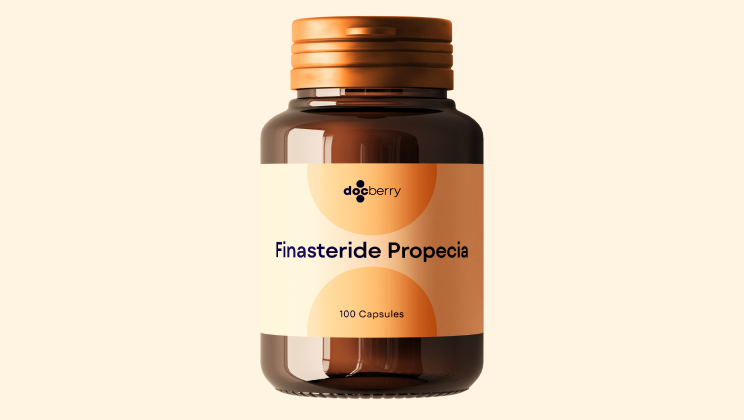
Finasteride (Propecia) Oral Hair Loss Treatment
Overview
Buy Finasteride Propecia For Hair Loss Online
Product Description
1. What is Finasteride Propecia? Definition & Core Compound Mechanics
In the fields of clinical dermatology, hair restoration, and trichology, Finasteride Propecia represents one of the most widely prescribed, scientifically validated, and FDA-approved oral medical treatments for male pattern hair loss (androgenetic alopecia).
Originally developed in the late 1980s as a treatment for benign prostatic hyperplasia (BPH) under the brand name Proscar at a 5 mg daily dose, clinical researchers quickly noticed a unique physiological side effect: male patients experiencing hair thinning were regaining hair density across their scalps. Subsequent dermatological clinical trials led to the development and 1997 FDA approval of Propecia Finasteride 1mg—a targeted, low-dose formulation engineered specifically to halt hair loss and restore hair density in men.
At its fundamental chemical level, Finasteride Propecia is a synthetic 4-azasteroid compound. It functions as a potent, specific inhibitor of Type II 5-alpha reductase—the intracellular enzyme responsible for converting circulating testosterone into its far more potent androgenic metabolite, dihydrotestosterone (DHT). By blocking this enzymatic conversion at its root, Finasteride Propecia For Hair Loss addresses the primary underlying hormonal driver of male pattern hair thinning, offering a long-term solution grounded in endocrinological science.
How Finasteride Propecia Works: Hormonal Mechanics & Follicular Preservation
To understand why Propecia and Finasteride therapies are so effective at reversing hair loss, it is necessary to examine how DHT interacts with hair follicles on the human scalp.
The Role of DHT in Androgenetic Alopecia
In genetically susceptible men, hair follicles located across the vertex (crown), mid-scalp, and hairline possess high concentrations of androgen receptors. Circulating testosterone enters the scalp tissue, where the local enzyme Type II 5-alpha reductase converts it into Dihydrotestosterone (DHT). DHT binds to androgen receptors inside the follicle’s dermal papilla cells with up to five times greater affinity than standard testosterone.
When DHT binds to these receptors, it triggers a destructive cascade:
-
Follicular Miniaturization: DHT shortens the anagen (active growth) phase of the hair cycle while lengthening the telogen (resting) phase.
-
Structural Degradation: With each progressive growth cycle, the hair follicle shrinks, producing thinner, shorter, less pigmented hair strands (transitioning from terminal hairs to fine vellus hairs).
-
Follicular Dormancy: Eventually, the miniaturized follicle stops producing visible hair strands altogether and undergoes fibrosis, resulting in permanent hair loss.
The Enzymatic Blocking Mechanism
Finasteride Propecia acts as a competitive, specific inhibitor of the Type II 5-alpha reductase enzyme. By occupying the active site of this enzyme, it prevents the conversion of testosterone into DHT.
A single daily dose of Propecia Finasteride 1mg lowers serum DHT levels by approximately 70% and decreases scalp tissue DHT levels by roughly 60% to 65%. By removing the majority of DHT from the scalp microenvironment, Finasteride Propecia For Hair Loss interrupts the miniaturization process, allowing miniaturized follicles to enlarge, recover, and resume producing thick, healthy, pigmented hair strands.
Recommended Dosage & Clinical Administration Protocols
Achieving optimal results with Finasteride Propecia requires strict adherence to standard daily dosing schedules, long-term consistency, and patience.
===================================================================================
                FINASTERIDE PROPECIA DOSING & PROTOCOL SUMMARY
===================================================================================
 PARAMETER           | CLINICAL PROTOCOL & SPECIFICATIONS
---------------------+-------------------------------------------------------------
 Standard Daily Dose | 1 mg oral tablet (Propecia Finasteride 1mg) taken once daily
 Administration      | Take at any time of day, with or without food
 Onset of Action     | Serum DHT drops within 8-24 hours; physical hair
                     | visible improvements emerge at 3 to 6 months
 Minimum Trial Period| 12 consecutive months to evaluate full clinical efficacy
 Long-Term Continuity| Continuous daily use required to sustain hair density
===================================================================================
Key Administration Guidelines
-
Standard Therapeutic Dose: The clinically established, FDA-approved dose for treating androgenetic alopecia in men is 1 mg taken orally once per day. Higher doses (such as 5 mg) offer no additional benefit for hair growth and increase the likelihood of side effects.
-
Consistency & Timing: Take Propecia Finasteride 1mg at approximately the same time each day to maintain stable systemic drug levels and steady 5-alpha reductase inhibition. It may be taken with or without food.
-
Treatment Duration: Hair growth cycles are slow physiological processes. While serum DHT drops dramatically within 24 hours of the first dose, visible improvements in hair retention and density require 3 to 6 months of continuous daily use. Maximum clinical results are typically evaluated at the 12 to 24-month mark.
-
Continuous Requirement: Finasteride Propecia is a maintenance therapy. If treatment is discontinued, 5-alpha reductase activity returns to baseline within days, serum DHT levels recover within weeks, and newly preserved hair density will gradually fade over 6 to 12 months, returning the scalp to its natural progression of hair loss.
Primary Clinical Benefits & Expected Outcomes
The extensive medical literature surrounding Propecia and Finasteride highlights its position as one of the most effective medical therapies for male pattern hair loss available.
Core Clinical Benefits:
-
Stops Active Hair Loss: Large-scale, multi-year clinical trials demonstrate that Finasteride Propecia For Hair Loss halts the progression of hair loss in approximately 86% to 90% of men who take it daily.
-
Promotes Genuine Hair Regrowth: In clinical studies, approximately 65% to 66% of men treated with Propecia Finasteride 1mg experienced measurable new hair regrowth and increased scalp coverage over 2 years, particularly across the vertex and mid-scalp regions.
-
Increases Hair Shaft Diameter: Beyond growing new strands, it reverses miniaturization, increasing the thickness, weight, and tensile strength of existing hair fibers to create a visibly fuller appearance.
-
Convenient Oral Regimen: Unlike messy topical solutions that require twice-daily application and hair styling management, oral finasteride requires a single daily pill.
-
Synergistic Potential: Finasteride Propecia pairs exceptionally well with topical vasodilators (like minoxidil). While finasteride addresses the root hormonal cause by lowering DHT, topical minoxidil increases blood flow to the root, providing a synergistic dual-action approach.
Safety Profile, Precautions, & Side Effects: Is It Safe to Use?
For the vast majority of men, Finasteride Propecia is a safe, well-tolerated medication with a low incidence of adverse effects. However, because it alters hormone conversion pathways, understanding its potential side effects and safety profile is essential.
General Safety & Tolerability
Over three decades of clinical data and real-world usage show that Propecia Finasteride 1mg is well tolerated by approximately 98% of male patients. Adverse events reported during clinical trials were generally mild to moderate and often resolved spontaneously over time or upon treatment discontinuation.
Potential Adverse Effects & Frequency
In double-blind, placebo-controlled clinical trials, sexual side effects occurred in a small minority of men (approximately 1.2% to 1.8% of users compared to 1.0% in placebo groups):
===================================================================================
                POTENTIAL SIDE EFFECTS OF FINASTERIDE PROPECIA
===================================================================================
 ADVERSE EFFECT CATEGORY | INCIDENCE RATE  | CLINICAL CHARACTERISTICS
-------------------------+-----------------+---------------------------------------
 Decreased Libido        | ~1.8% of users  | Mild reduction in sexual desire
 Erectile Dysfunction    | ~1.3% of users  | Difficulty achieving/maintaining erection
 Ejaculatory Disorders   | ~1.2% of users  | Decreased ejaculatory volume
 Breast Tenderness/Gyno  | < 0.5% of users | Transient breast tissue enlargement
 Psychological Effects   | Rare / Varied   | Occasional reports of low mood or brain fog
===================================================================================
Most adverse reactions resolve completely within a few weeks after stopping the medication, as systemic DHT levels return to baseline.
Critical Safety Warnings & Precautions
-
Strict Contraindication in Women & Pregnancy: Finasteride Propecia is strictly contraindicated in women who are pregnant or may become pregnant. Because 5-alpha reductase inhibitors prevent the conversion of testosterone into DHT—a hormone necessary for the normal development of male fetal genitalia—pregnant women must not handle crushed or broken tablets due to potential cutaneous absorption.
-
Prostate-Specific Antigen (PSA) Screening: Finasteride Propecia lowers circulating Prostate-Specific Antigen (PSA) levels by approximately 50% in men. Physicians monitoring PSA levels for prostate screening must double the measured PSA concentration in patients taking finasteride to ensure accurate health interpretations.
-
Blood Donation Restrictions: Men taking Propecia and Finasteride should not donate blood while taking the medication and for at least 1 month after their last dose to prevent pregnant women from receiving finasteride-containing blood transfusions.
Finasteride Propecia remains the gold-standard medical therapy for halting and reversing male pattern baldness. By blocking the Type II 5-alpha reductase enzyme and reducing scalp DHT levels by up to 65%, Propecia Finasteride 1mg directly targets the root hormonal cause of hair loss. With a proven clinical track record, high tolerability, and simple once-daily dosing, utilizing Finasteride Propecia For Hair Loss allows men to protect their existing hair, increase strand density, and maintain long-term hairline confidence.
Indication
Mechanism of Action
Clinical Efficacy
Dosage and Administration
Safety Profile and Common Adverse Effects
Contraindications and Precautions
Contraindications:
Precautions:
Where To Buy Finasteride Propecia For Hair Loss Online
Drug Interactions
Use in Special Populations
Monitoring and Follow-up
Clinical Evidence and Key Studies
Patient Counseling Points
Administration, Storage, and Handling
Packaging and Presentation
Legal and Regulatory Status
Advantages and Limitations
Limitations:
Propecia And Finasteride For Sale
Frequently Asked Questions (FAQ)
Finasteride Vs Propecia
Conclusion
| Prices | 1 Month Supply |
|---|
Be the first to review “Buy Finasteride Propecia Online”
Related products
Hair Loss
Reviews
There are no reviews yet.